Resources

Why Traditional Egress Monitoring Breaks Down at Cloud Scale and What to Do Instead
In the cloud, there is no single perimeter. Traditional egress monitoring was built for environments that don't change. Cloud environments do... At scale, you can't place inspection points across thousands of workloads scattered across multiple VPCs, regions, and accounts. The only approach that holds up is behavioral: knowing what normal looks like for each workload, and catching the moment it doesn't.
Watch a Demo
Discover how our AI-driven, agentless security engine delivers unmatched visibility, detects behavior anomalies, and disarms threats before they escalate. In just 30 minutes, see how CloudFence helps you take full control of your cloud security.

Click ‘Play’ To See A Demo

When a workload gets compromised in your cloud, the first sign is rarely an inbound alert. It's outbound traffic :
- a connection to a destination it never reached before,
- data leaving quietly over HTTPS,
- ..etc
Most teams aren't watching that direction. And in large cloud environments, even the teams that are watching what’s leaving their cloud environment quickly find that what worked at small scale doesn't hold up when you're dealing with hundreds of workloads across dozens of accounts.
The problem isn't egress monitoring. The problem is egress monitoring at scale. And scale changes everything.
What "at scale" actually means
In a small environment - a handful of applications, a few known partner integrations, one or two accounts - egress is manageable. You know what's talking to what. You can write rules. You can review logs manually when something looks off.
In a production scale cloud environment, that clarity is gone:
- Hundreds of workloads and microervices - each with different outbound patterns
- Dozens of accounts, and VPCs, and VNETs - each with its own routing patterns.
- Ephemeral workloads spinning up and down constantly - containers, Lambda functions, batch jobs that exist for minutes
- AI agents reaching model providers, tool endpoints, and SaaS platforms with patterns that shift based on tasks
- Multiple environments - dev, staging, production - where the same domain may be acceptable during testing but a policy violation in production.
Do the math. 200 workloads, each with an average of 15 outbound destinations. That's 3,000 destination relationships to understand, baseline, and monitor.
No team can manage that manually. No static ruleset can keep up.
At scale, the question is no longer "what is this connection?" It's "is this connection normal for this specific workload, right now?"
Why the approaches that work at small scale collapse at large scale
Perimeter inspection points
Traditional egress security places inspection tools at the network edge. Traffic crosses the firewall, the proxy, the appliance and gets inspected.
That works when there is one edge.
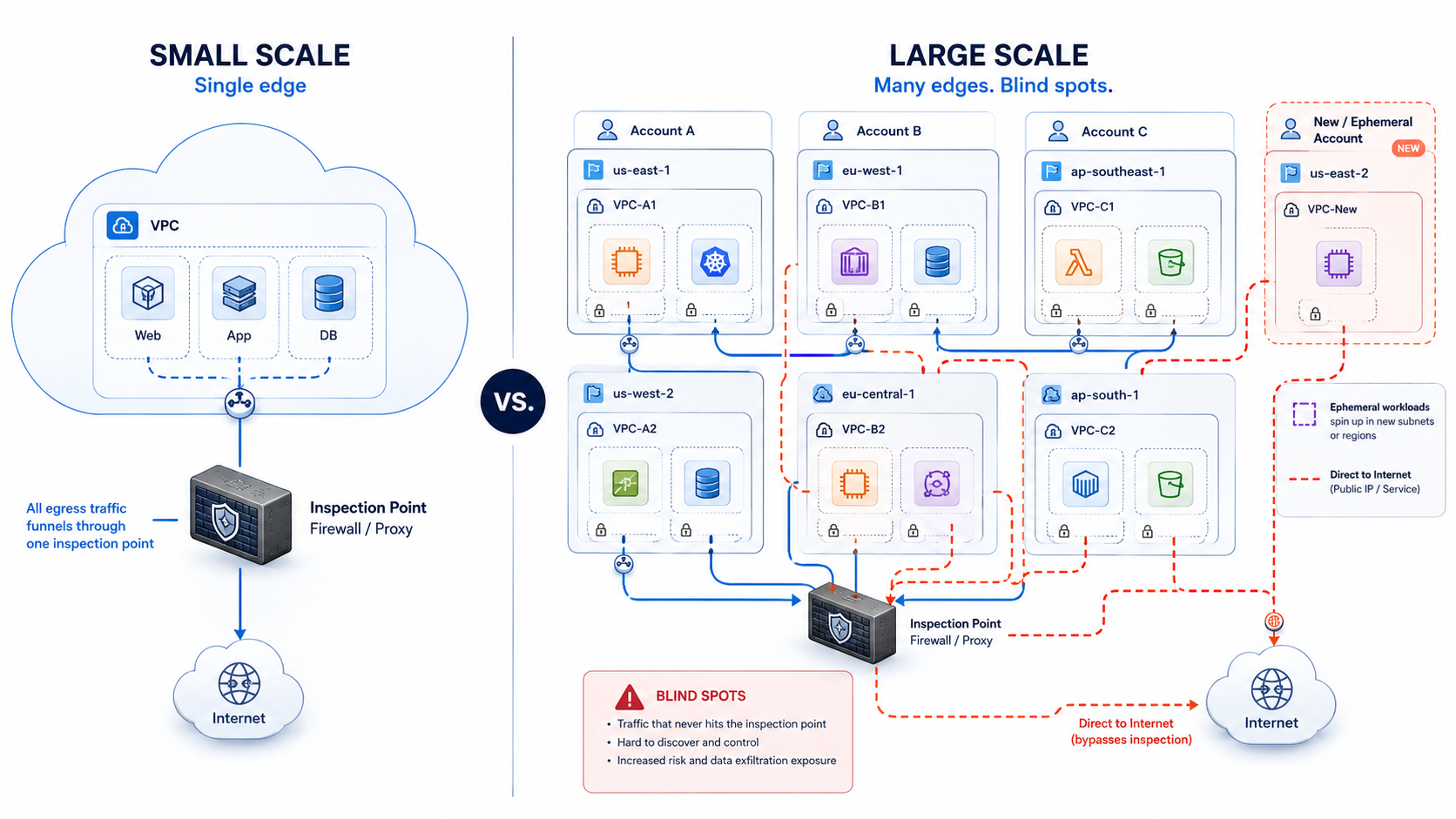
A scaled cloud environment doesn't have one edge. It has dozens:
- Each VPC has its own routing
- Some workloads use public IPs and bypass the inspection point entirely
- Ephemeral projects and workloads spin up in new subnets, new regions, sometimes new accounts
If your egress monitoring depends on traffic passing through a specific point, any workload that doesn't route through it is invisible. At scale, that blind spot isn't a corner case — it's a significant portion of your environment.
You can't inspect traffic that never crosses your inspection point.
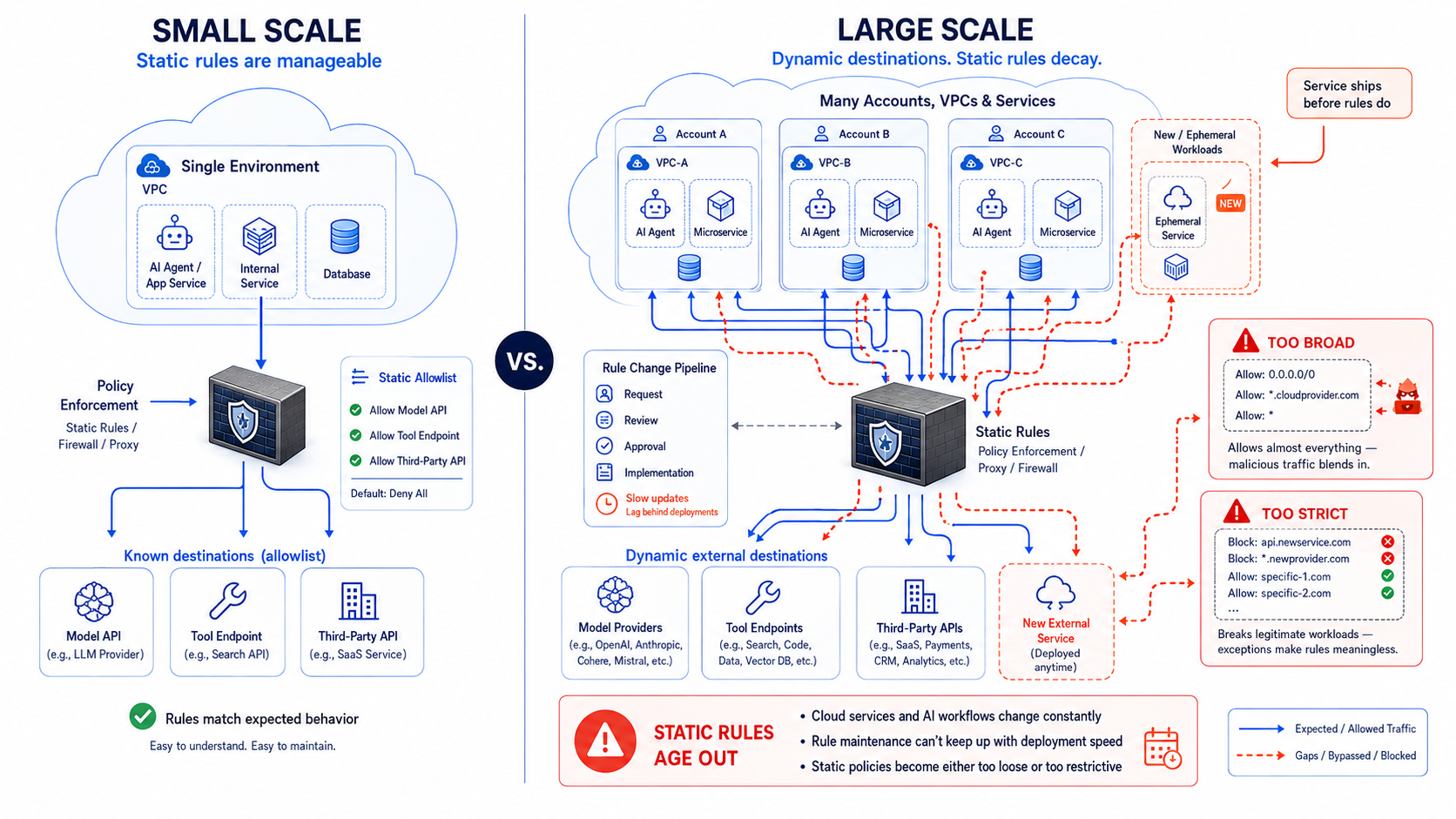
Static rules
Static rules feel like you’re in control: Define what's allowed. Block everything else.
At small scale, that's manageable. At large scale, it becomes the problem.
- AI agents don't have a fixed outbound pattern. They reach model providers, tool endpoints, and third-party APIs based on what they're asked to do, and that changes with every task. There is no static rule that accurately captures what an AI agent will need to reach tomorrow.
- A new microservice gets deployed. It needs to reach three external APIs. Someone has to know that, write the rules, get them approved, and push them - before the service can function. In fast-moving teams, the service ships before the rules do.
At scale, static rules age out faster than teams can maintain them. The result is one of two failure modes:
- Rules so broad they allow almost everything, and malicious traffic blends in undetected.
- Rules so strict they break legitimate workloads ,and teams carve out exceptions until the rules are meaningles.
Static rules were designed for infrastructure that stays put. Cloud infrastructure doesn't.
Manual log review
Raw logs contain the evidence. VPC Flow Logs, DNS query logs - they show what workloads are doing.
But at scale, the volume makes them unusable without context.
A single busy VPC can generate millions of flow log records per day. Across dozens of accounts and regions, that becomes billions. Finding the one connection that matters — a workload quietly connecting to an unfamiliar destination - requires knowing what normal looks like for that specific workload, so you can spot the deviation.
Without that context, log review is pattern matching in noise.
Logs are not visibility. Context is.
The scale problem is a context problem
At scale, you cannot evaluate any single egress connection in isolation. You need to know what that workload normally does before you can judge whether what it's doing right now is normal or suspicious.
At ten workloads, a skilled analyst can hold that context in their head.
At five hundred, it has to be built automatically: per workload, continuously, from the logs that cloud environments already generate.
The context that makes egress legible at scale is a per-workload behavioral baseline.
What behavioral baselines make possible at scale
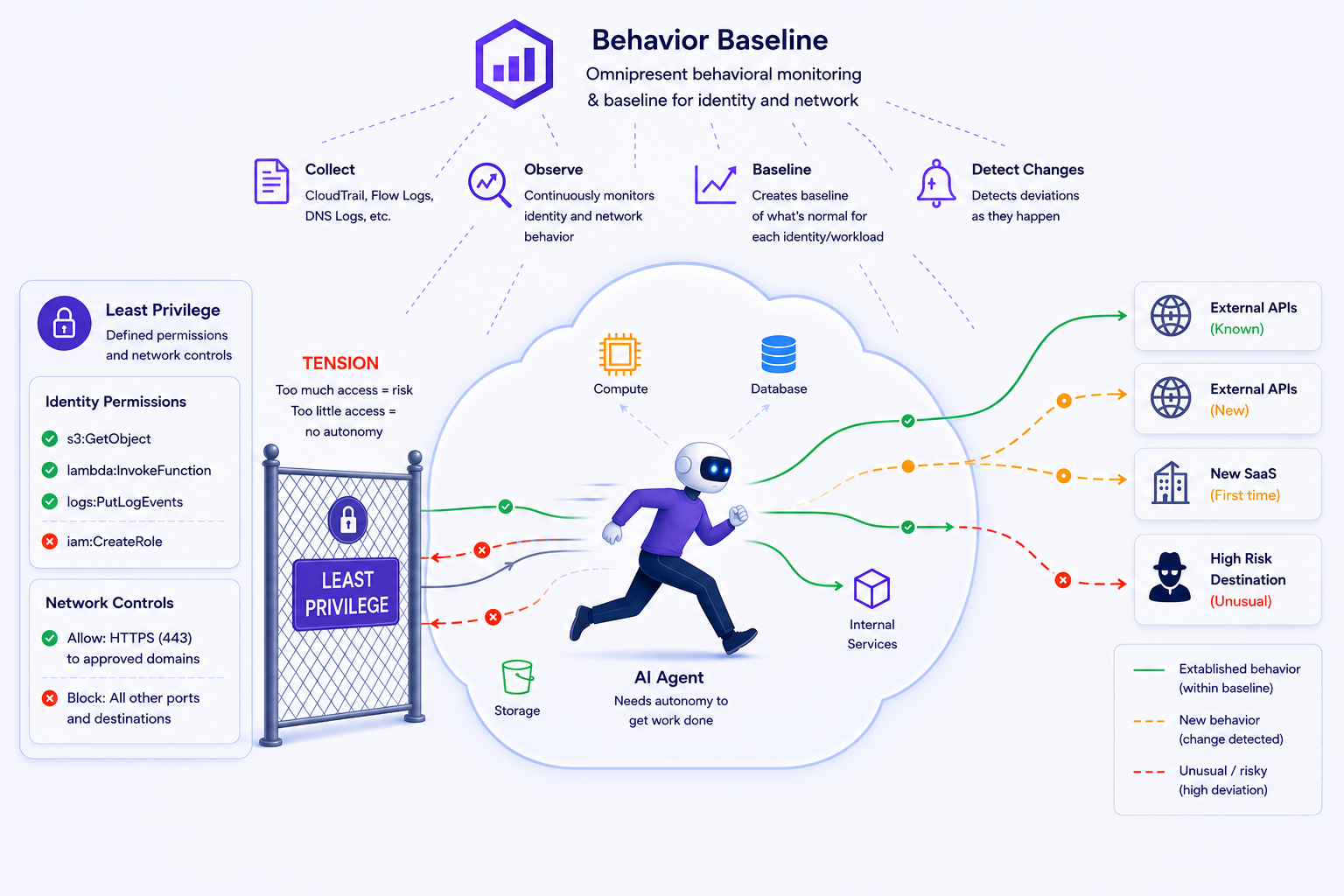
A per-workload behavioral baseline is a continuously updated model of what a workload normally does outbound:
- Which domains it normally resolves
- Which geographies it normally communicates with
- Which ports and protocols it normally uses
- How frequently it connects, and on what intervals
With a baseline in place:
- Instead of reviewing 3,000 destination relationships manually, you surface only the ones that deviate.
- Instead of writing rules for every workload, you detect when any workload behaves outside its established pattern.
- Instead of maintaining allowlists that go stale, you let observed behavior define what's trusted and flag what isn't.
What the right approach looks like
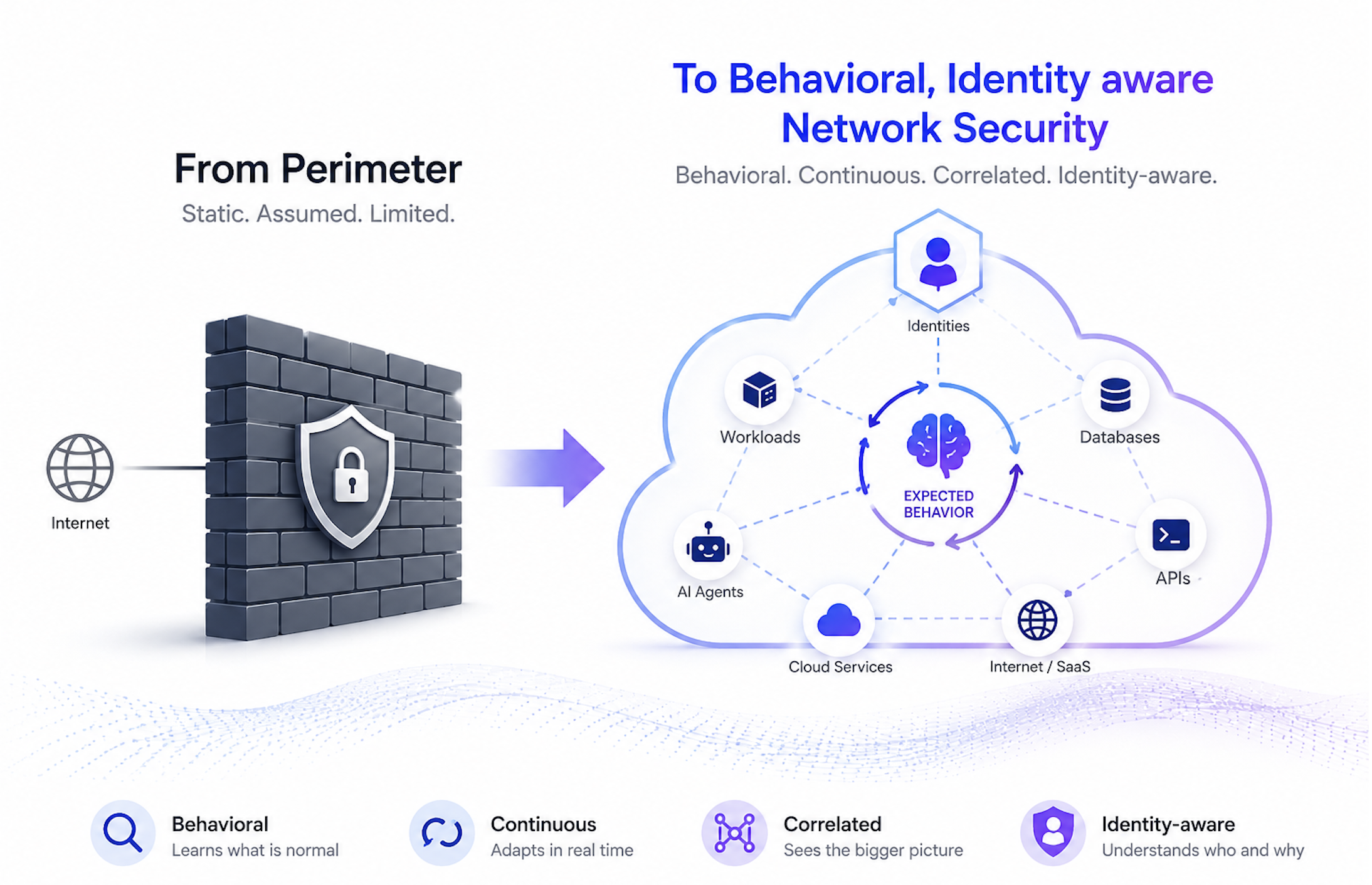
From static inspection points → to agentless, log-native coverage
Instead of relying on traffic crossing a specific point, or on agents that can't be deployed on workloads at scale and aren't even possible on managed services and PaaS resources — cloud-native logs already cover everything. VPC Flow Logs, DNS query logs, CloudTrail, and Azure NSG Flow Logs are generated across every workload, managed service, and account without any instrumentation. They capture exactly what egress monitoring needs:
- Every network connection a workload makes
- Every domain it resolves
- Every API call it performs
From static rules → continuous behavioral learning
Static rules define what's allowed. Behavioral baselines learn what's normal, and that distinction matters at scale.
A rule describes what you expected when you wrote it. It doesn't know about the workload that was deployed last week or the AI agent whose outbound pattern shifts with every task.
At scale, rules describe a version of your environment that no longer exists.
On the other hand behavioral baselines learn what each workload actually does: which destinations it reaches, which domains it resolves, which patterns are consistent.
The observed behavior becomes the foundation for precise, current rules
From manual log review → context-aware detection
Billions of log records are not visibility, they're noise. The only way to make them actionable is context: knowing what each workload normally does, so that a deviation stands out immediately rather than disappearing into the volume.
Instead of asking a team to find the one suspicious connection in a billion records, the baseline already knows what normal looks like for that workload, and surfaces the moment something doesn't match.
How CloudFence approaches egress monitoring at scale
CloudFence is built for distributed cloud environments where static rules and perimeter appliances approach don't and can't scale.
The approach is
- Agentless
- Built from cloud-native logs
- No traffic mirroring required
- Based on per-workload behavioral baselines
- Designed for continuous visibility across cloud environments
How it works
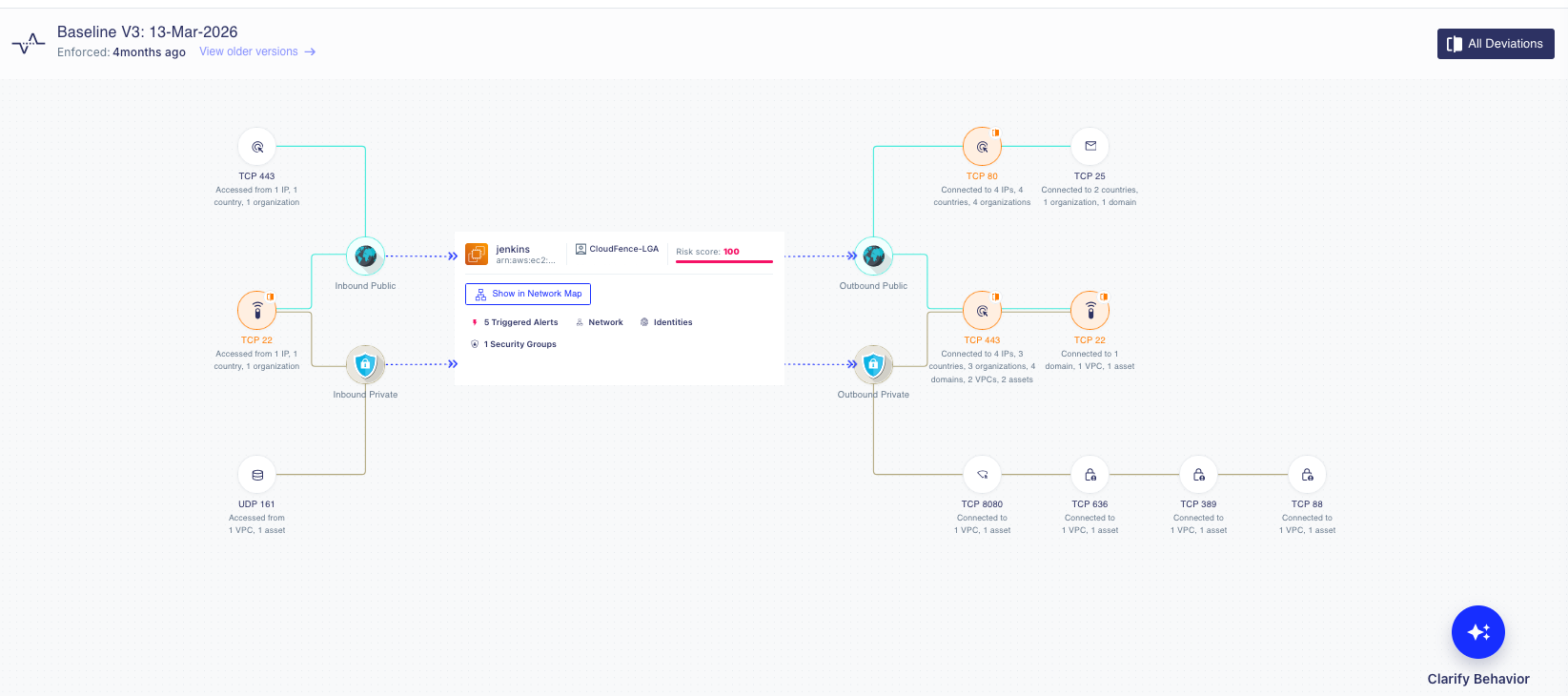
For each workload, CloudFence continuously learns:
- Which destinations it normally reaches
- Which domains it normally resolves
- Which geographies are expected
- Which ports and protocols are typical
That baseline is built automatically, from the moment a workload starts running, across every VPC, account, and region.
What it surfaces
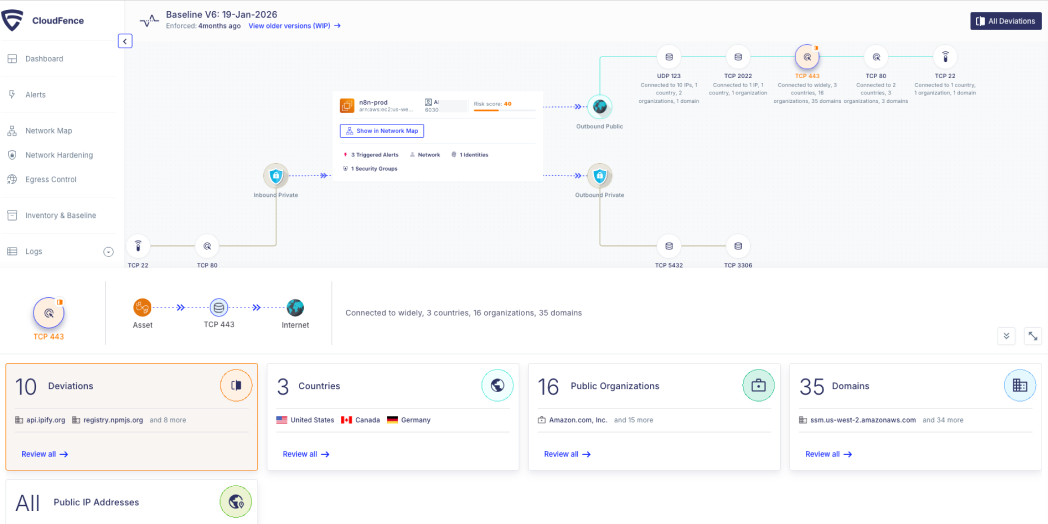
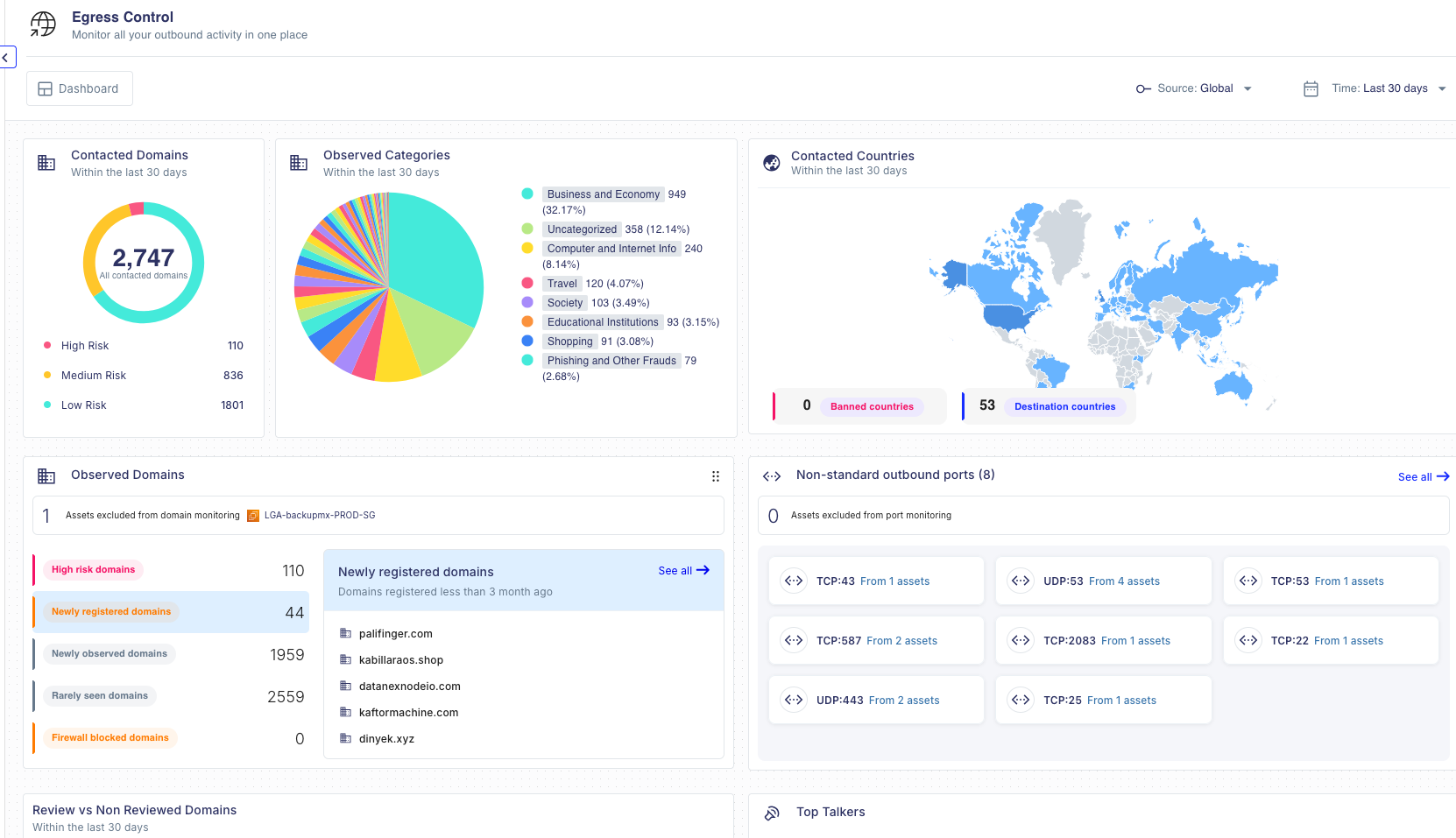
When a workload deviates from its baseline, CloudFence immediately alerts security teams - with context, and that context is what makes egress actionable at scale.
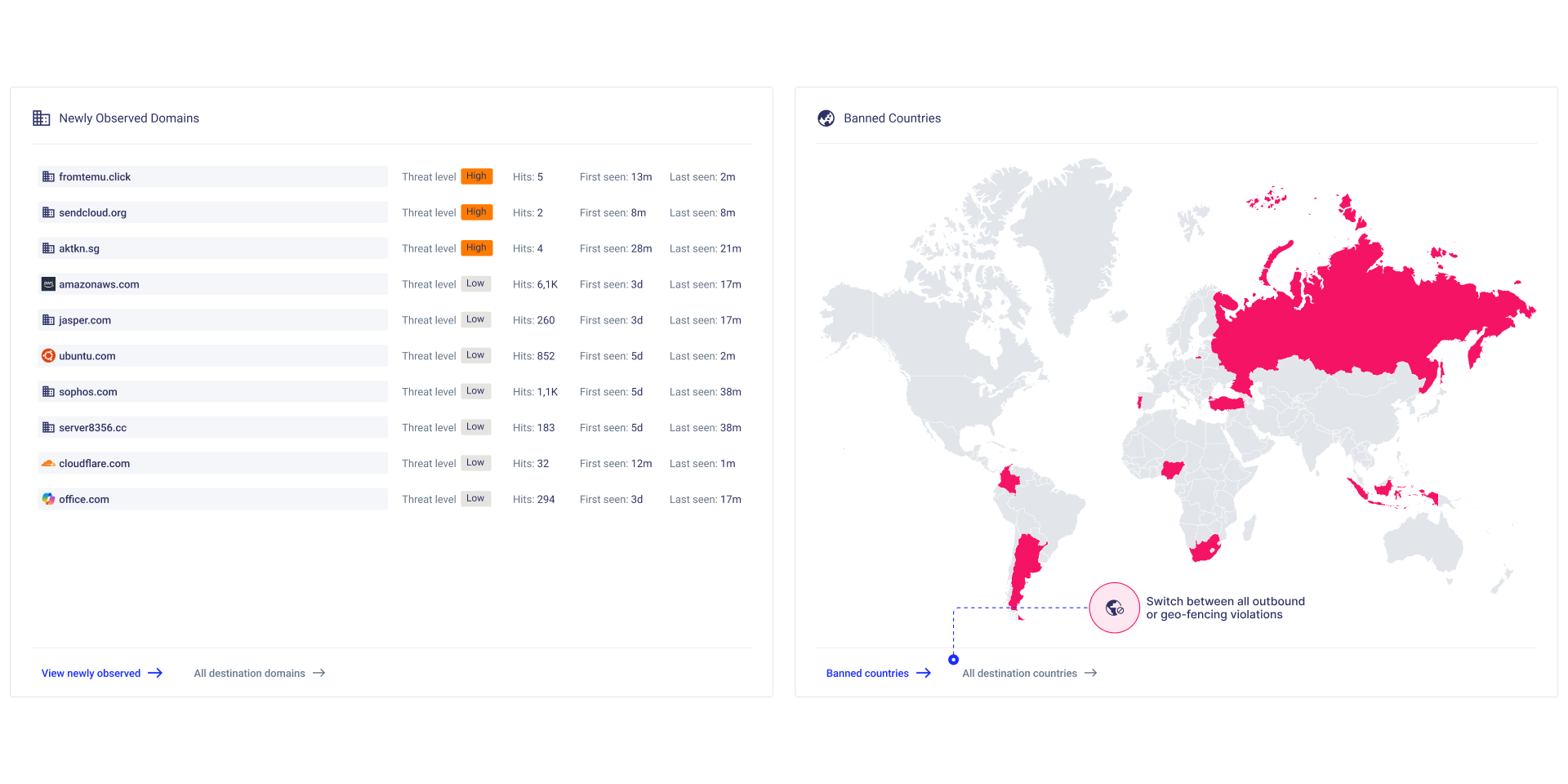
- Newly observed or rarely contacted destinations
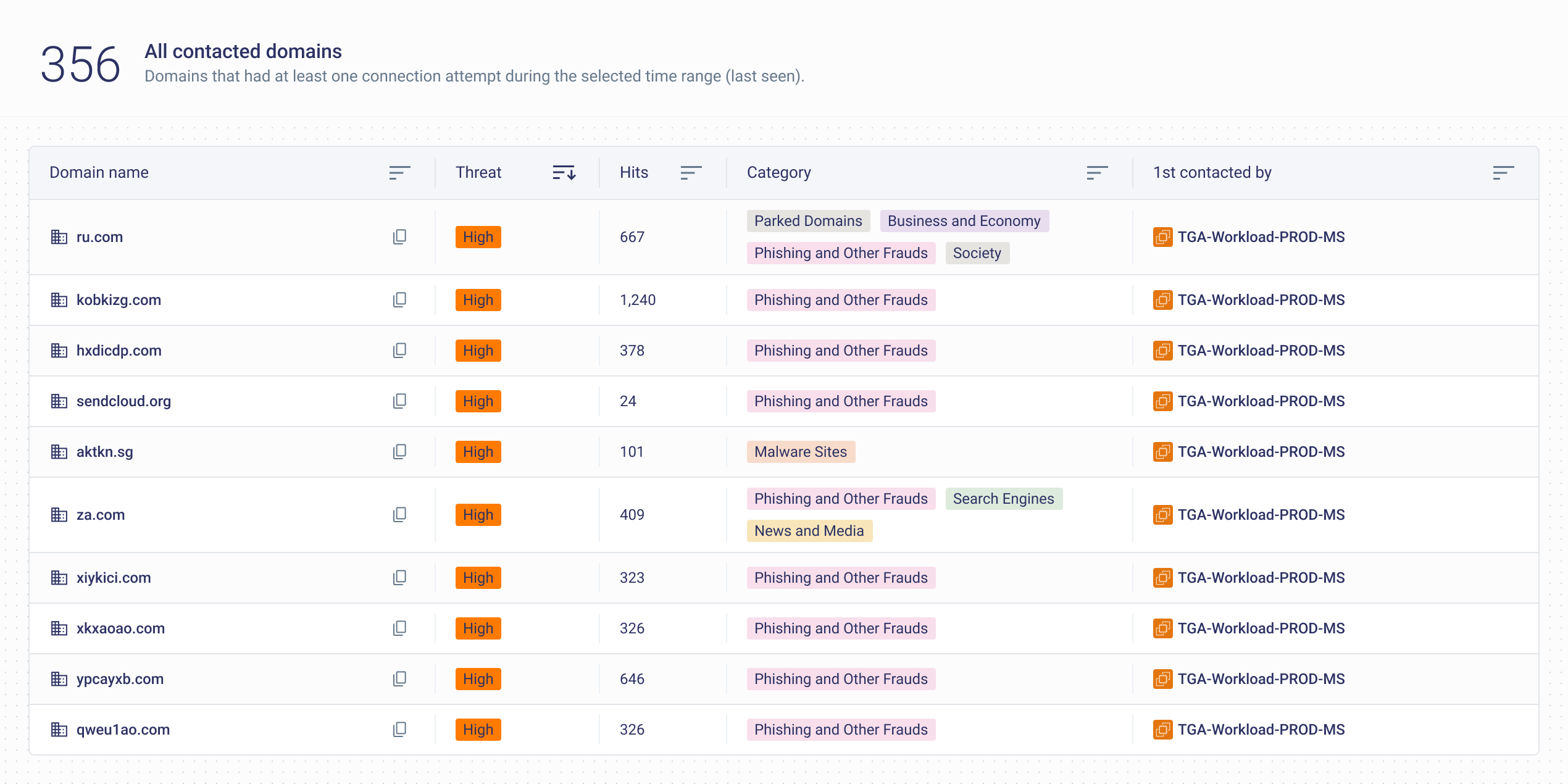
- High-risk and suspicious domain categories
- Unusual geographies
- Known malicious IPs or domains
- Abnormal outbound communication patterns such as unusual volume of data sent out.
Conclusion
Egress monitoring at small scale is a solved problem. A few rules, a firewall at the edge, occasional log review, that's enough when you have few workloads and accounts.
At scale, none of that holds up. The perimeter fragments across dozens of VPCs and accounts. Rules go stale faster than teams can maintain them. Log volumes become unmanageable without context.
The only approach that scales is one that learns what normal looks like for every workload automatically, and surfaces the moment something changes - without requiring a human to write rules, or review every log.
CloudFence helps security teams monitor outbound communications at cloud scale using agentless approach.
See how CloudFence builds behavioral baselines, detects suspicious egress activity, and helps teams act on risky outbound communications before they turn into breaches.
Watch a Demo
Discover how CloudFence's AI-driven engine establishes behavioral baselines, delivers real-time visibility, and detects threats before they escalate—helping your team shift from reactive firefighting to strategic cloud security management.
Stop Being in the Dark!
Watch a Demo
Discover how CloudFence's AI-driven engine establishes behavioral baselines, delivers real-time visibility, and detects threats before they escalate—helping your team shift from reactive firefighting to strategic cloud security management.

Related Posts
Keep Exploring Cloud Security Insights
Looking to dive deeper? Check out these handpicked articles related to cloud visibility, threat detection, and workload protection.