Use cases
Resources
Discover how our AI-driven, agentless security engine delivers unmatched visibility, detects behavior anomalies, and disarms threats before they escalate. In just 30 minutes, see how CloudFence helps you take full control of your cloud security.


Your cloud architecture is drifting — whether you realize it or not.
Over the past year, we've reviewed dozens of complex cloud environments alongside security teams. One issue surfaces almost every time: architectural drift.
It's not negligence. It's not malice. It's the natural outcome of speed, complexity, and the absence of continuous visibility.
Teams design with intention:
But by the time the environment is live and evolving, the reality on the ground looks very different:
→ Web load balancers end up deployed in database subnets
→ Security groups quietly accumulate rules that allow cross-environment CIDRs
→ Traffic bypasses inspection points entirely
No one planned for this. But it happens — and it's happening in your environment right now !
The traditional response to architectural drift is the periodic security audit: pull thousands of security group rules, compare them against design documents, try to identify what's changed, or manually reconstructing topology by crawling subnets, ENIs, route tables, and peering connections. At any meaningful scale, both break down:
The more fundamental problem: audits compare configurations against documentation. But documentation reflects intent, not ground truth. What you need to see is what traffic is actually flowing, and where the actual communication paths diverge from the design continuously, not on a schedule.
CSPM and CNAPP platforms are valuable, but they're built to catch misconfiguration, not architecture. They evaluate resources in isolation against compliance benchmarks. What they can't see is the structural relationship between resources and that's exactly where architectural drift lives.
Examples they'll miss entirely:
None of the above triggers a CSPM /CNAPP alert. None fail a compliance check. They're invisible to posture scanners because posture scanners don't reason about design intent, they reason about individual resource configurations.
Firewalls and network ACLs enforce what you told them to enforce. They ask: does this connection match an allow rule? They don't ask: should this connection exist at all, given how this environment was designed?
The gap between architectural intent and live reality lives in a layer that rules-based tools were never built to see.
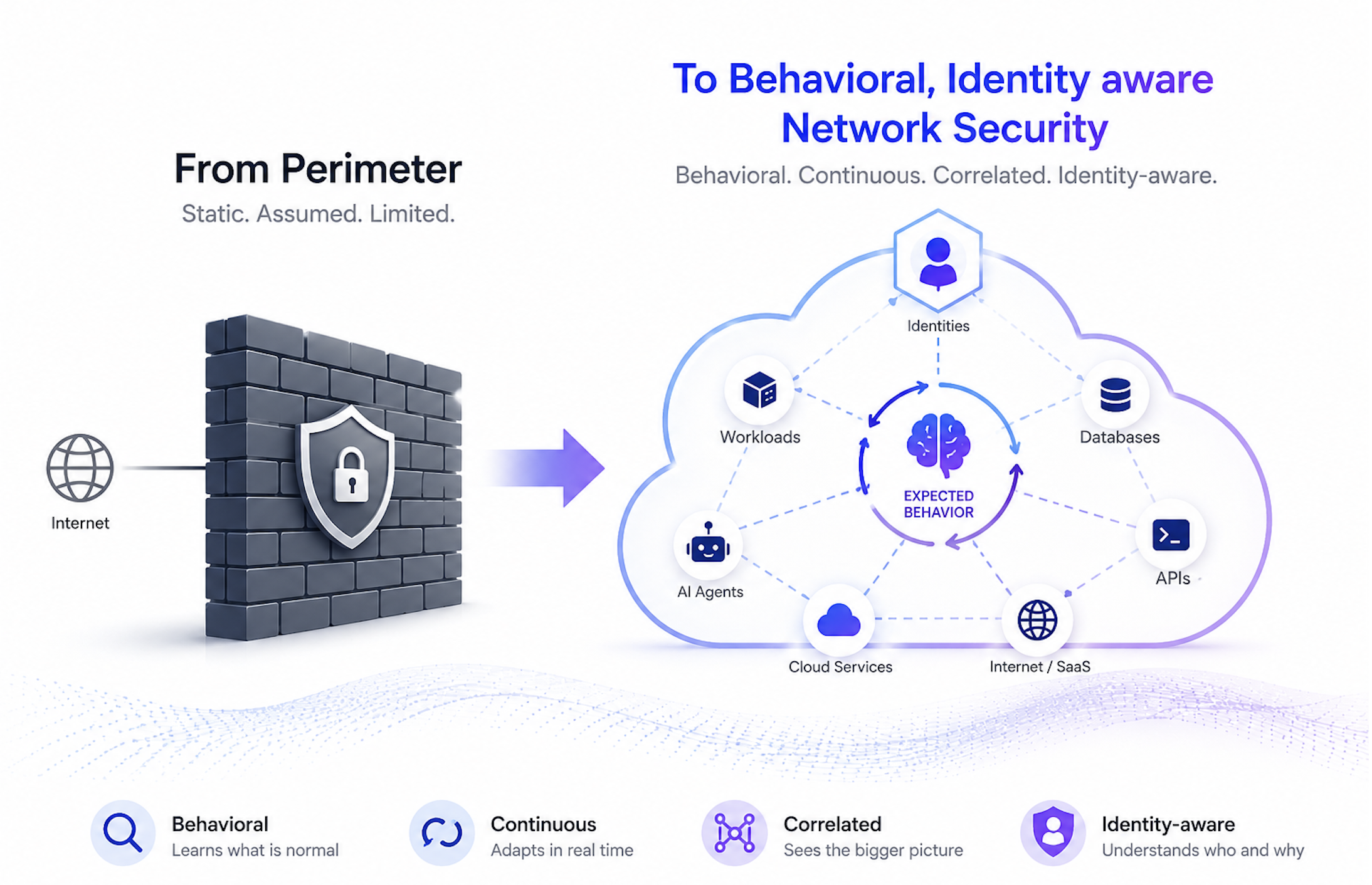
Closing the architecture-versus-reality gap isn't about adding more scanning tools. It requires a different model entirely: one built around three capabilities that most environments are missing today:
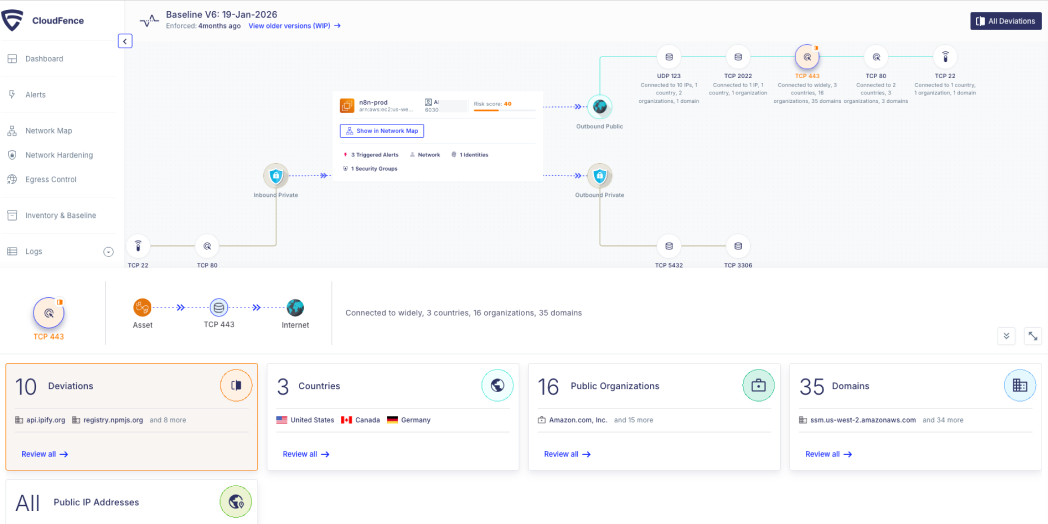
A real-time picture of which workloads are communicating, through which subnets, across which paths, built from actual network signals, not from what your IaC templates say should be there.
This means ingesting the signals your cloud already generates: Flow Logs, DNS query logs, resource metadata and turning them into a continuously updated picture of ground truth.
Security teams should be able to translate architectural decisions directly into verifiable rules: no load balancer in a database subnet. Dev and Prod never communicate directly. All outbound traffic routes through an inspection point.
These rules run continuously against the live state of the environment.
The moment a guardrail is breached — a workload in the wrong subnet, a security group rule opening an unintended path, traffic bypassing an inspection layer — the team knows. Not next quarter. Not after the next pentest. The moment it happens.
The gap between your architecture diagrams and your live cloud environment isn't a failure of intent. It's a failure of visibility.
Teams that close this gap don't do it with more audits or more rules, they do it by making ground truth visible in real time, continuously and by building the ability to know the instant their architecture stops matching their design.
Discover how CloudFence's AI-driven engine establishes behavioral baselines, delivers real-time visibility, and detects threats before they escalate—helping your team shift from reactive firefighting to strategic cloud security management.
Discover how CloudFence's AI-driven engine establishes behavioral baselines, delivers real-time visibility, and detects threats before they escalate—helping your team shift from reactive firefighting to strategic cloud security management.

Looking to dive deeper? Check out these handpicked articles related to cloud visibility, threat detection, and workload protection.