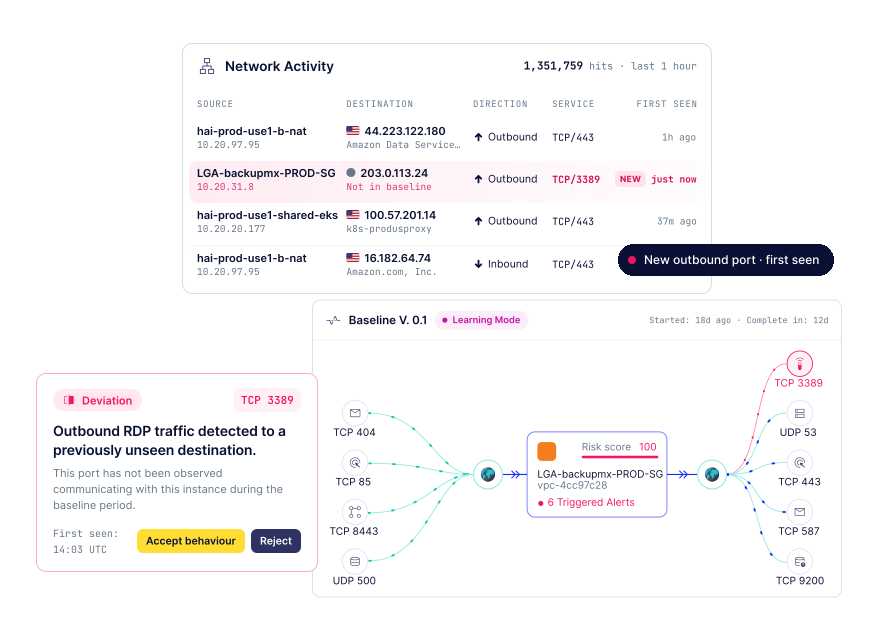
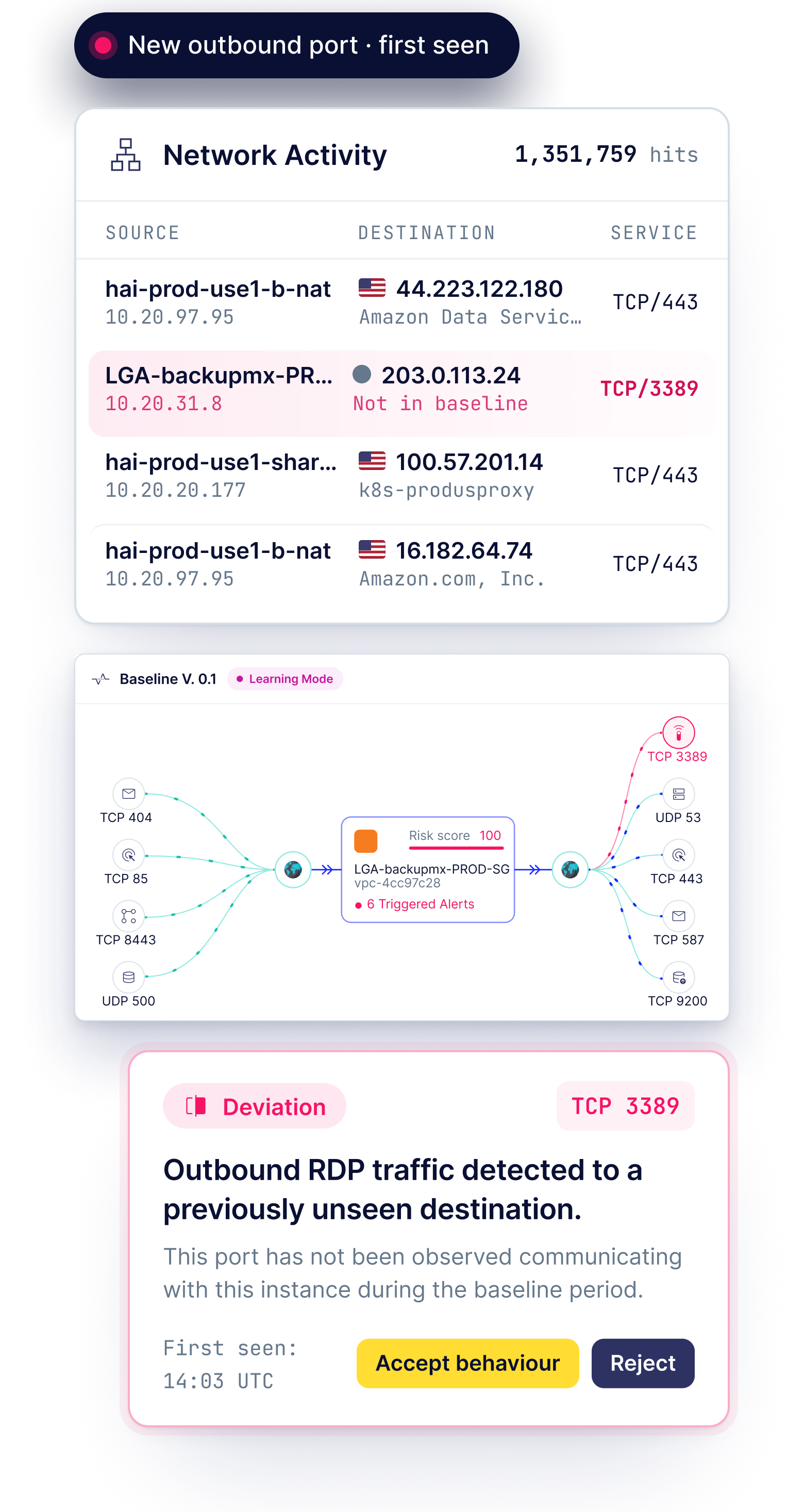

Cloud security has spent years controlling what can get in. What about what gets out?
Most teams know what is exposed in their cloud, but struggle to answer a simple question: where are our workloads actually connecting out to?
CloudFence gives you visibility and control over workload communications without agents, firewall VMs or forcing traffic through an inspection point.
CloudFence fills a unique gap in cloud security. Getting real visibility into cloud network communications has always been difficult. CloudFence gives us that visibility, while also learning the normal behavior of each workload so we can detect when something changes. They combine that with identity behavior monitoring which is especially relevant as AI workloads become more prevalent.
You controlled the way in. But threats don't always come through the front door.
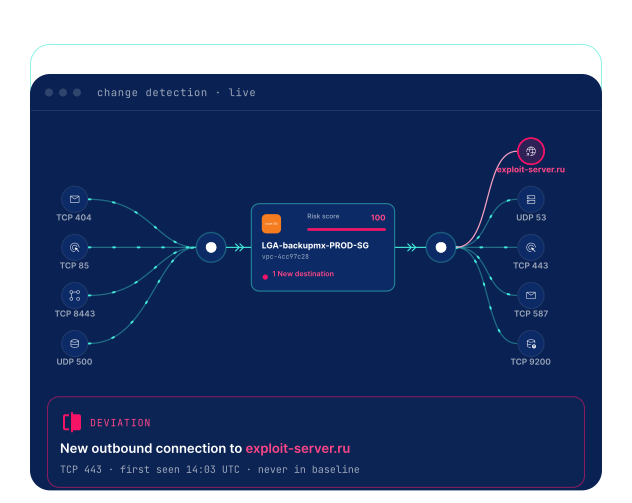
With supply-chain attacks and compromised identities, threats don’t always require an exposed inbound path. What matters is knowing when a workload starts behaving differently and connecting to destinations it never has before.
CSPM and CNAPP find exposure and misconfigurations, but don't establish how each workload normally communicates.
Traditional firewalls provide control, but require traffic redirection and added infrastructure, while still lacking the cloud context to know whether a workload’s communication is expected.
CloudFence takes a different approach.
No agents. No firewalls.
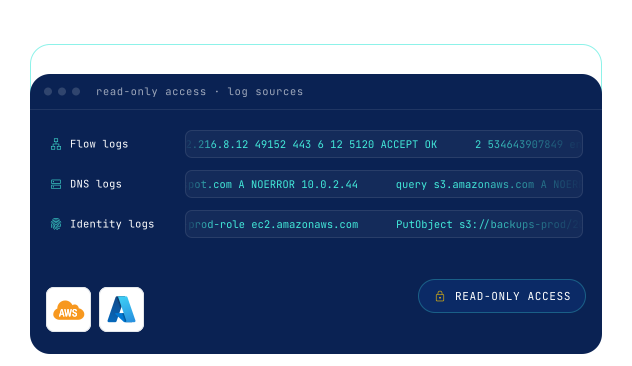
We use the cloud logs you already have.
One read-only role. No traffic changes
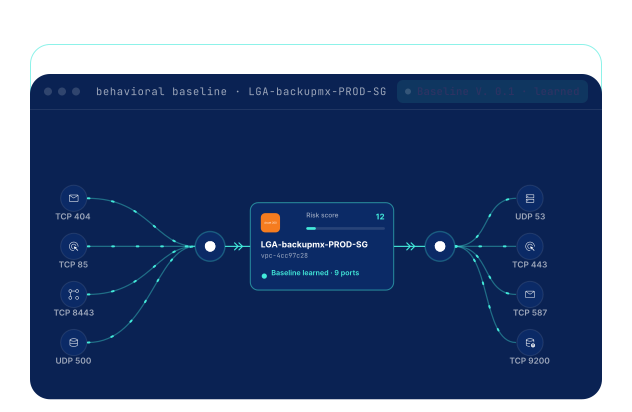
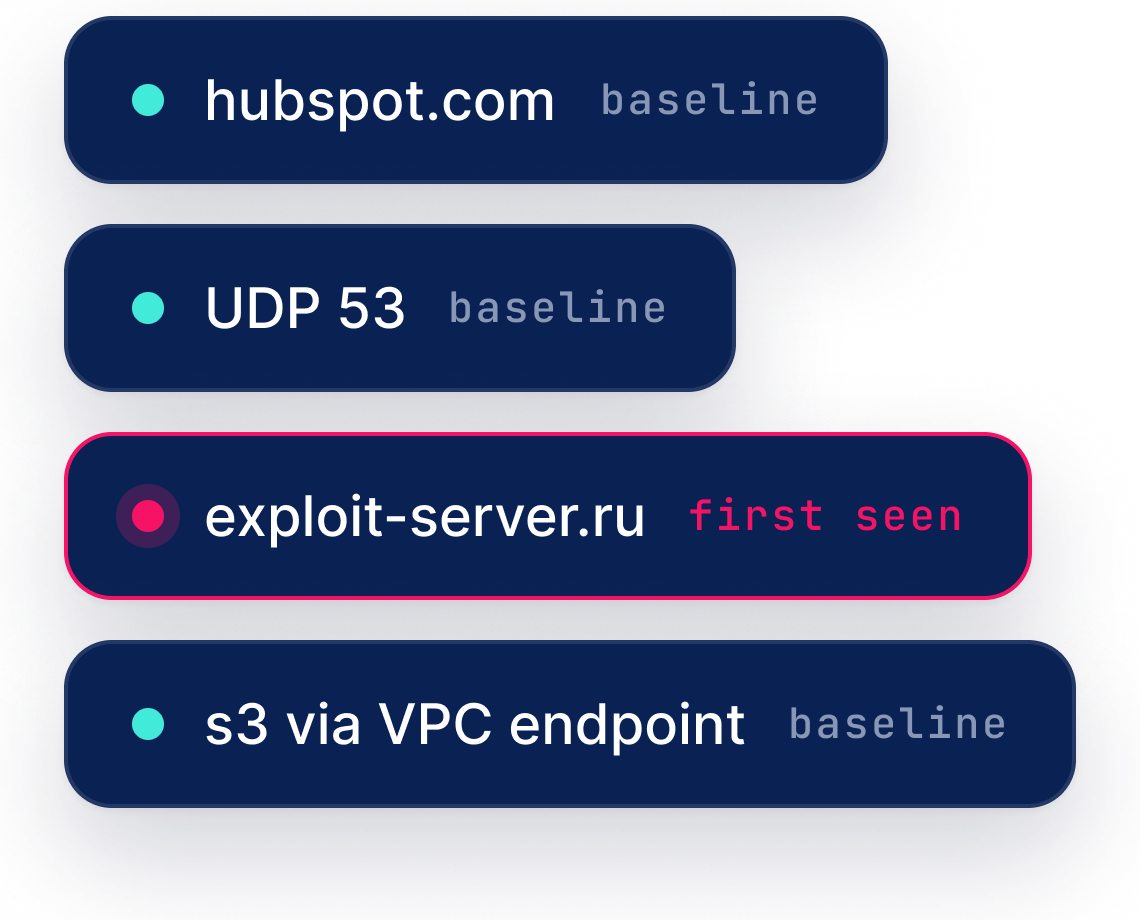
Know every workload by its behavior
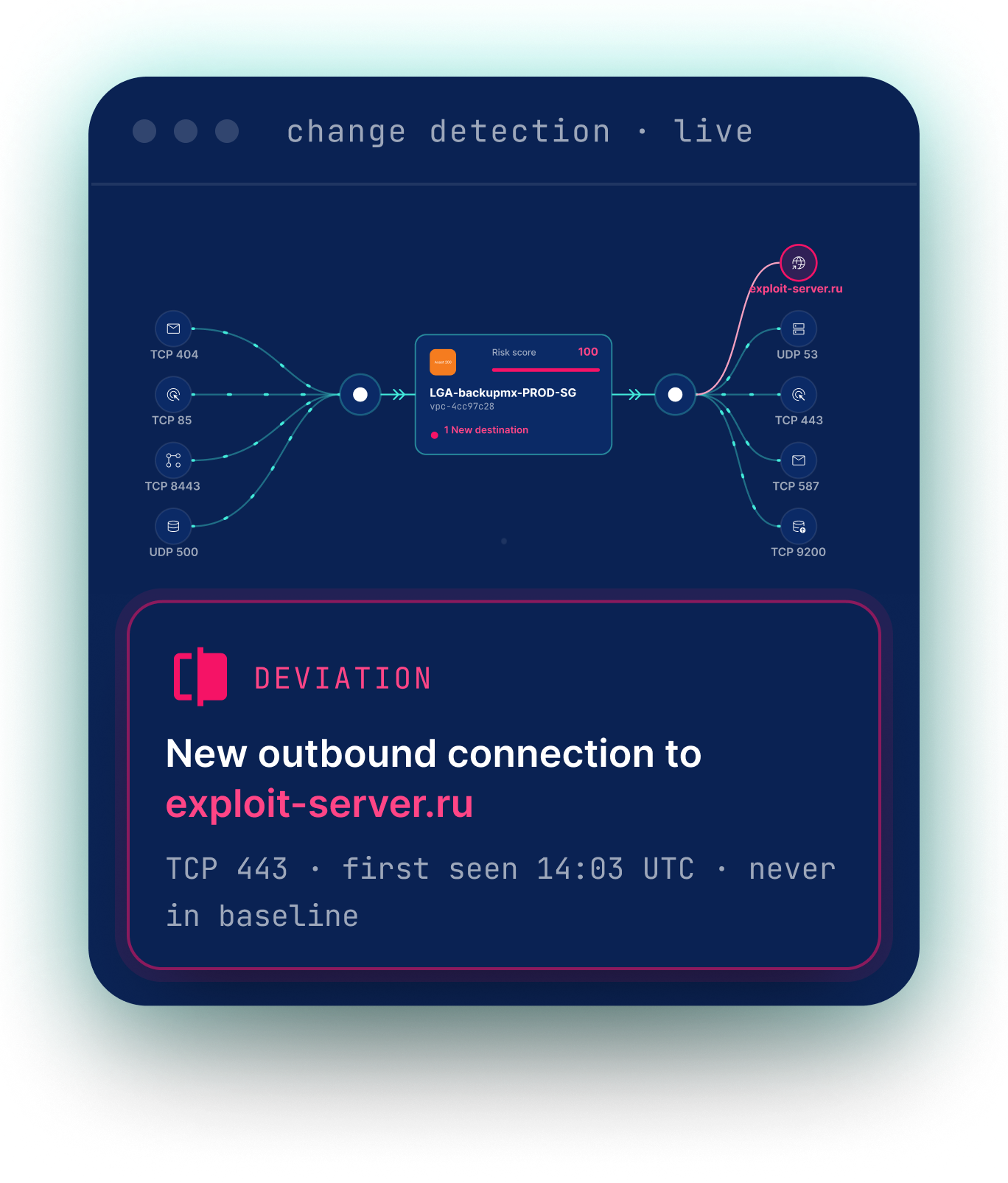
Know the moment something changes
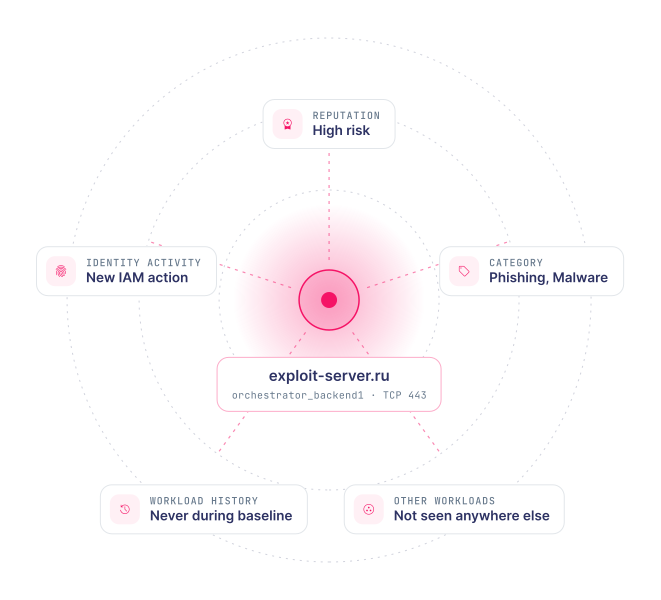
Less noise. More context around what changed
CloudFence evaluates changes against the context around them: the destination's reputation and category, whether it appears across other workloads, the workload's history, and related network and identity activity, to surface only the changes that deserve attention.
A large healthcare company with a significant cloud footprint across AWS and GCP wanted to understand where its cloud-deployed LLM workloads were communicating. CloudFence surfaced outbound destinations the security team wasn't expecting and aware of.
While baselining workload communications for an insurance company with ~800 workloads on AWS, CloudFence detected staging workloads unexpectedly communicating with production.
At a customer running on AWS, workloads normally reached S3 through VPC endpoints. CloudFence detected when some started going through a NAT Gateway instead, the destination hadn't changed, but the path had.
A large technology company needed to understand actual usage across more than 8,000 Security Group rules in AWS and remove unused access.
CloudFence maps observed communications against the rules allowing them, and gave the DevSecops team the evidence and the confidence to remove unused rules without causing a single production outage.
A cybersecurity company running on Azure expected workload traffic to pass through its centralized inspection hub.CloudFence detected a workload connecting directly instead, revealing a communication path the security team wasn't expecting.
Want to know where your workloads are connecting?
Move beyond static rules and legacy network appliances in the cloud. Visualize workload communications, control egress traffic, detect behavioral deviations, and remove unused access - all natively from your cloud logs